Both sides at a glance
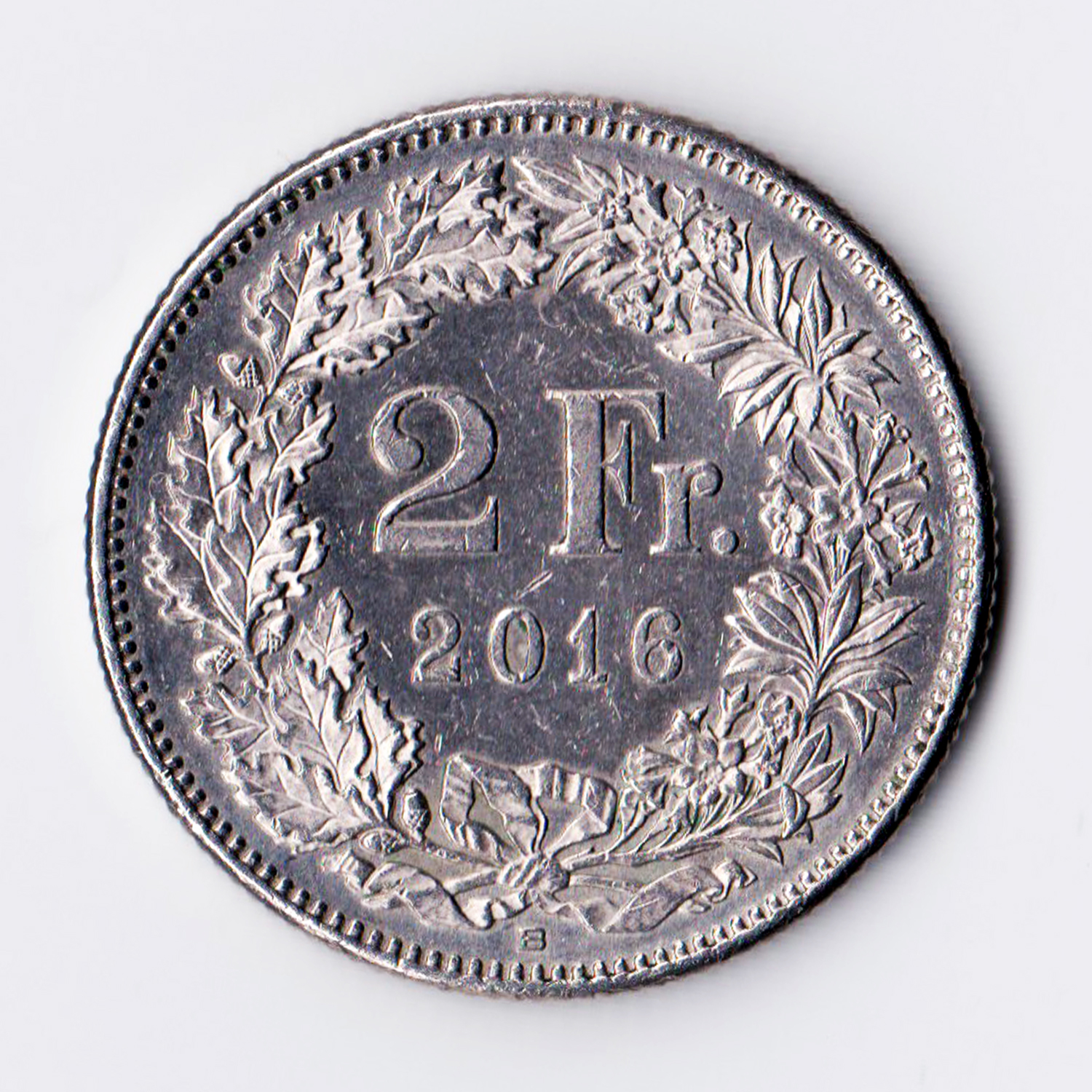
Reverse (Image 1) — the denomination “2 Fr.” and year “2016” enclosed in a wreath of oak leaves and alpine roses, tied with a ribbon at the bottom. The small “B” at the base is the mintmark for the Bern Mint — the only Swiss mint, which has struck virtually all Swiss franc coins since the 19th century.
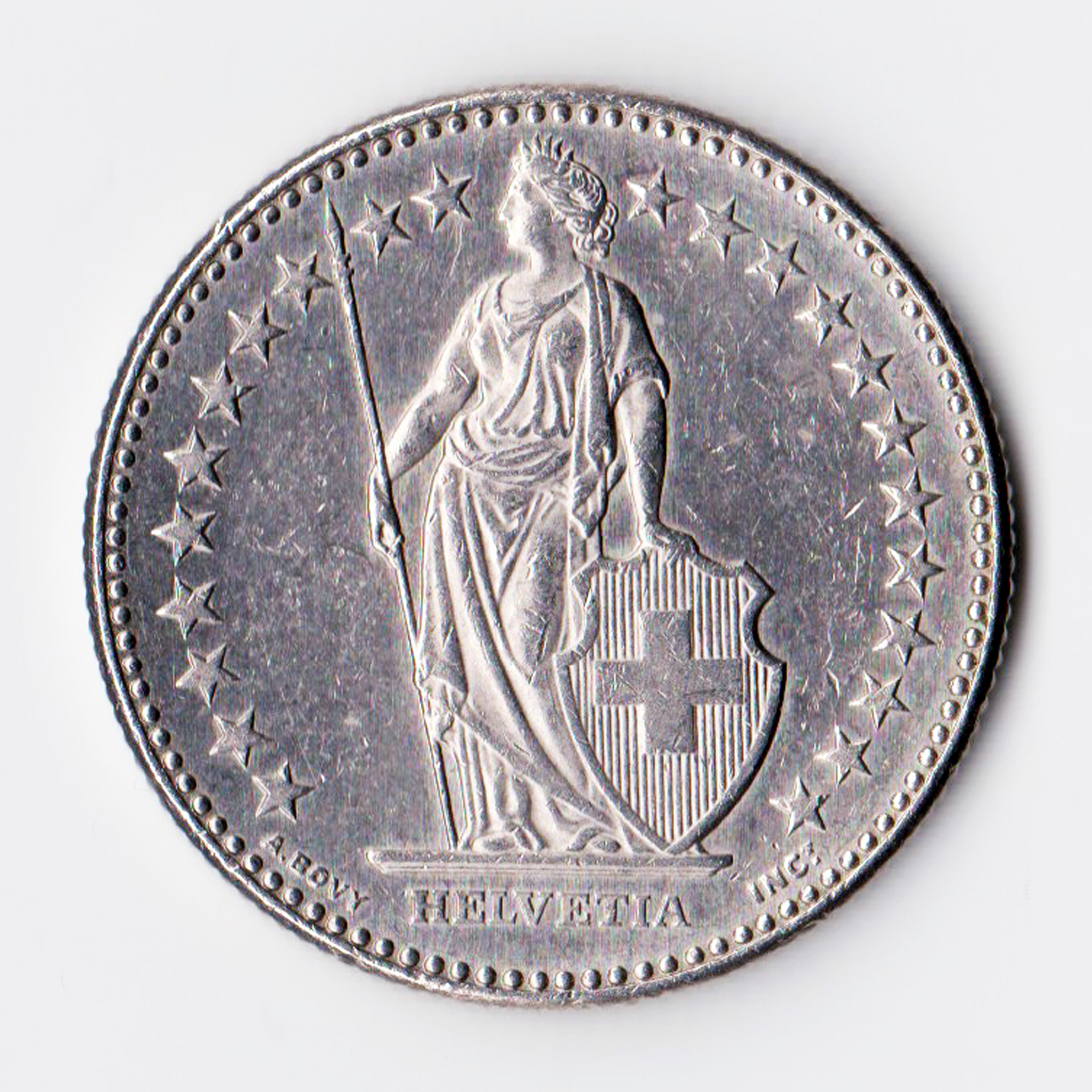
Obverse (Image 2) — the iconic figure of Helvetia, the allegorical female personification of Switzerland, standing, facing left, wearing a toga, holding a spear in her right hand and supporting a shield bearing the Swiss cross with her left hand. 23 stars surround her, representing the cantons of the Swiss Confederation — a 23rd star was added in 1983 for the Canton of Jura. The inscription “HELVETIA” appears below, along with the engraver’s signature “A. BOVY INCT”.
The original plates for the ½, 1 and 2 franc coins were cut by Geneva medalist Antoine Bovy (1795–1877) in 1874 — and the design remains essentially unchanged to this day, over 150 years later.
A coin of remarkable longevity
The 2 franc debuted in 1874. Toga-clad Helvetia is circled by stars representing the Swiss cantons. When a nation’s coinage carries the same look for decades, it is a reliable indicator of economic stability — and Switzerland is known for its rock-solid currency.
This copper-nickel 2 franc coin replaced the silver pieces minted between 1874–1967. In 1967, the price of silver soared, causing the melt value of the silver 2 franc pieces to exceed their face value. Switzerland started experiencing a severe shortage of cash, as people were exporting coins to be melted. It is estimated that around 100 tonnes of silver in ½, 1 and 2 franc coins were melted before the switch to copper-nickel in 1968.
Specifications:
| Country: | Switzerland |
| Metal: | Copper-Nicke |
| Denomination: | 2 Francs |
| Mint: | B (Bern) |
| Diameter: | 27.40 mm |
| Weight: | 8.80 g |