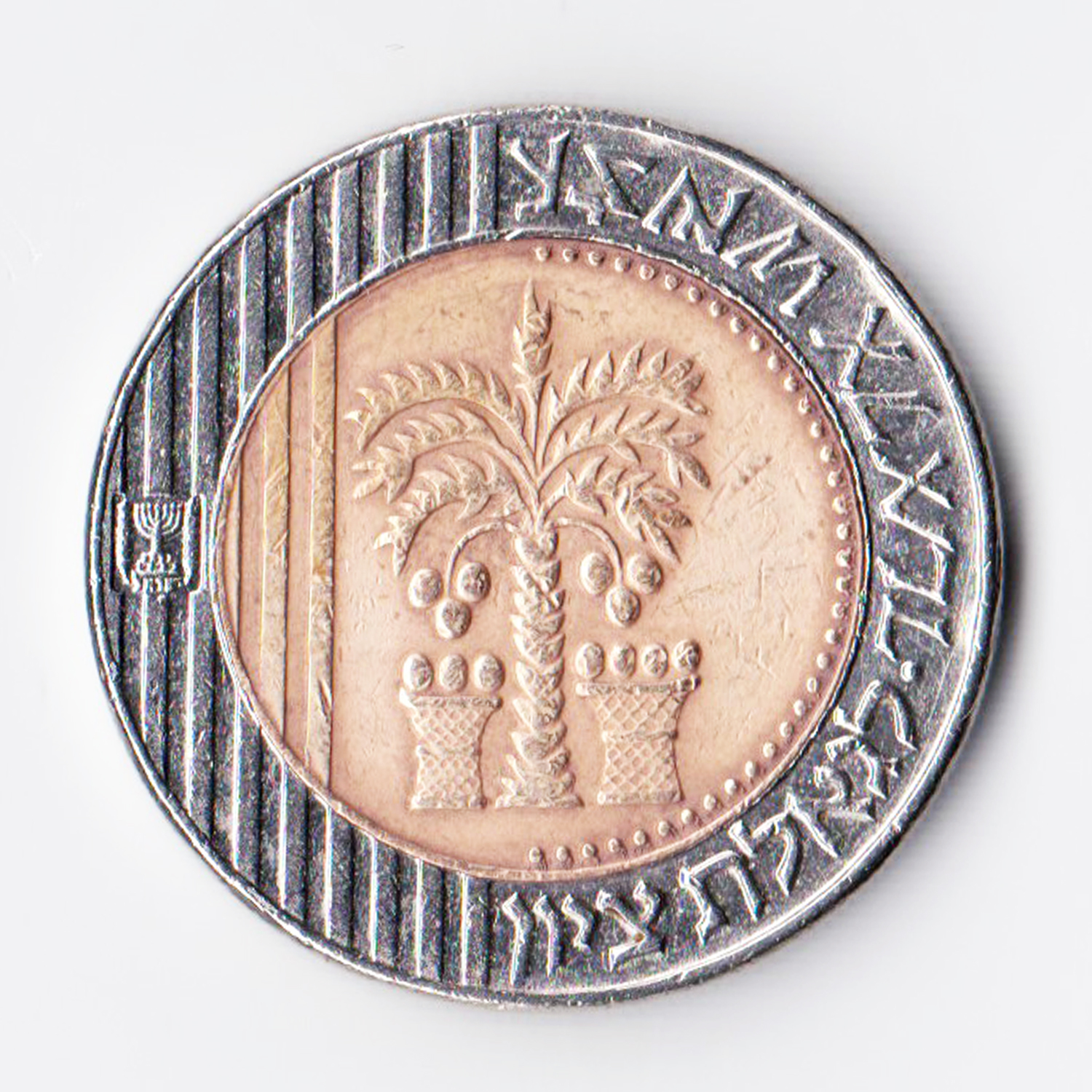
Obverse (Image 1) — designed by Reuven Natales, the coin features a palm tree with dates, with two woven baskets with dates at the foot of the tree. The symbol of the State of Israel (menorah) appears on the left side of the palm tree, and the inscription “Legalat Zion” (“For the Redemption of Zion”) is displayed on the right, written in both ancient Hebrew and modern Hebrew. Pearls are embedded along the right half of the circumference of the inner circle, while the left side is partially grooved. The Jerusalem Post
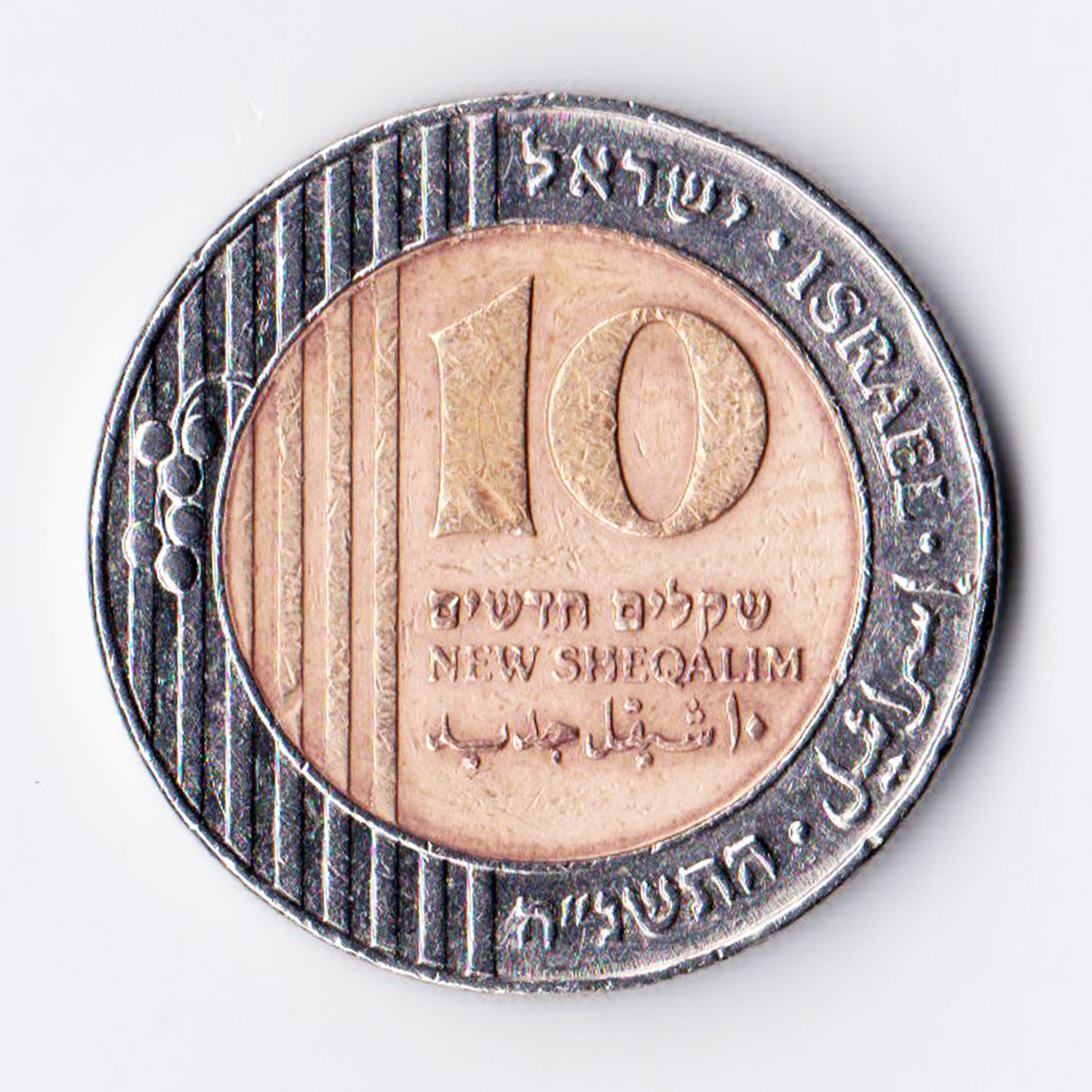
Reverse (Image 2) — the denomination “10 New Sheqalim” inscribed in Hebrew, Arabic, and English (“NEW SHEQALIM”). To the right is the name of the country in Hebrew, Arabic, and English, along with the year of minting in the Hebrew calendar. The Jerusalem Post
A design rooted 2,000 years in history
The obverse is based on an ancient coin from 69 C.E. — the fourth year of the Jewish-Roman War, one year before the destruction of the Second Temple. Numista The palm tree and baskets of dates were classic symbols of Judea on ancient coinage, making this a remarkable link between modern Israel and its ancient heritage — just like the 10 agorot coin.
The inscription
“לגאלת ציון” — “For the Redemption of Zion” — appears in both ancient (paleo-Hebrew script) and modern Hebrew, echoing the very words used on Jewish coins during the revolt against Rome nearly 2,000 years ago.